As misinformation has become a pressing issue for researchers, educators, and pretty much anyone who consumes any media this day in age, various institutions have invested in creating interactive tools to help the public spot deceptive content. To understand some of these efforts I used two of these resources designed to teach people what false content is, and how accounts create and benefit from it.
Tool 1: RumorGuard
What is it and how to use it:
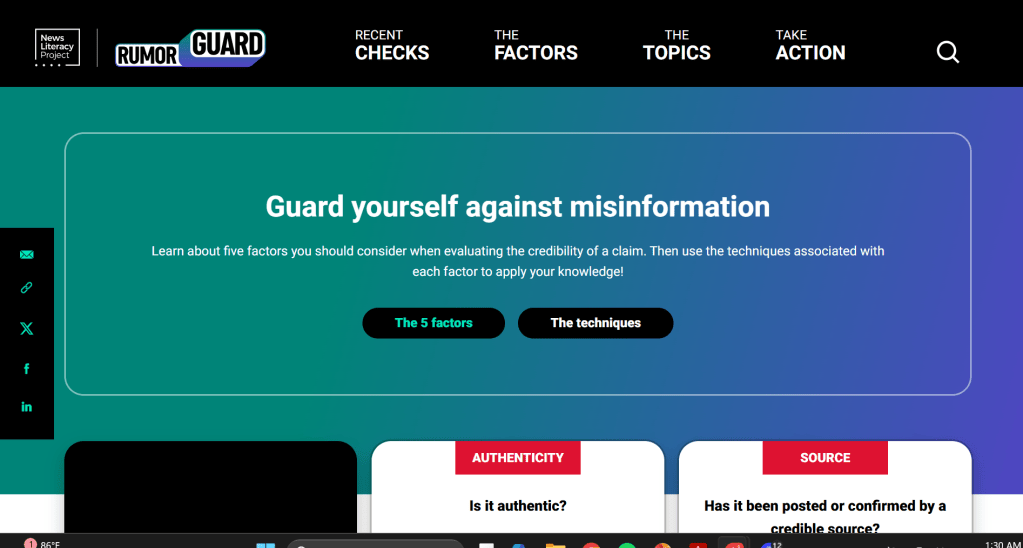
RumorGuard is a platform created by the news literacy project that debunks trending rumors while teaching users how to verify claims themselves. Users scroll through a chronological feed of real world examples of false claims (usually viral social media posts). Clicking on a specific post reveals a breakdown of why the claim is false.
What it teaches:
The site teaches users to evaluate digital information by using five core credibility factors. Authenticity, source, evidence, context, and reasoning. By breaking down each hoax using this rubric the platform teaches individuals the exact techniques fact checkers use, such as identifying false context, and spotting imposter context.
Evaluation of effectiveness:
RumorGuard is highly effective because it utilizes a real world applied approach. Instead of relying on abstract theories, it uses exact memes, fake images, and headlines people encounter daily. By providing step by step methods and concrete verification techniques, it empowers people to act as their own fact checkers. It also helps the website is very user friendly making the experience for the user very enjoyable.
Tool 2: Bad News
What it is and how to play it:
Bad News is an award winning choice based, choose your own adventure browser game. Where you as the user take on the role of a fake news producer/influencer. The goal is to build a massive twitter following by spreading anger, fear and conspiracy theories. The player chooses dialogue options to manipulate fictional audiences while carefully managing their credibility and follower meters.
What it teaches:
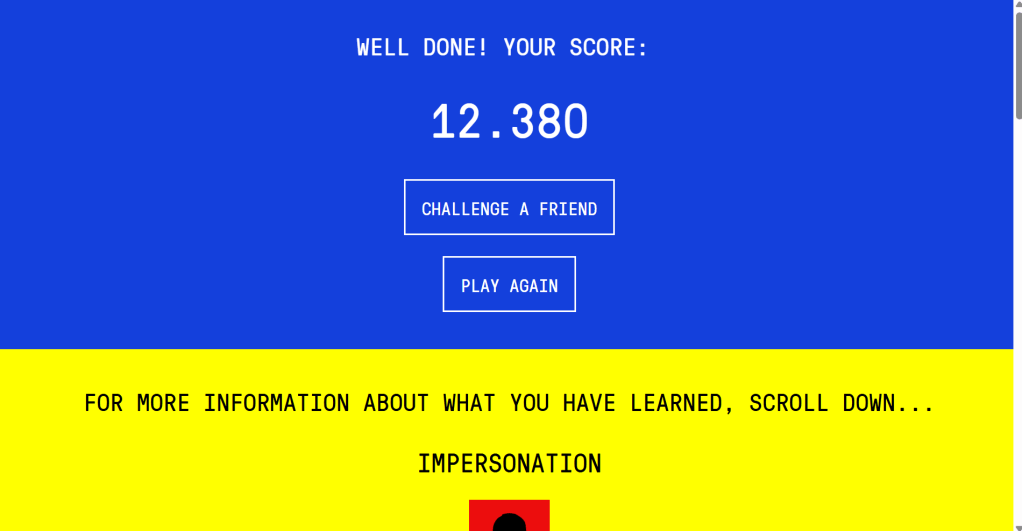
Instead of traditional fact checking, Bad news teaches the underlying mechanics of deception. Players learn 6 misinformation techniques: polarization, invoking emotions, spreading conspiracy theories, trolling, deflecting blame, and impersonation.
Evaluation Of effectiveness:
The game is built on the theory of “psychological inoculation” or “prebunking.” Peer reviewed research by Roozenbeek and van der Linden (2019) published in Palgrave communications found that playing Bad news acts like a psychological vaccine. By preemptively exposing players to weakened doses of fake news tactics, they develop “mental antibodies.” The researchers found that playing the game significantly boosted a players ability to spot misinformation techniques and boosts their confidence in judging online content.
The value of interactive tools and games
Interactive tools and educational games are great mechanisms for eradicating misinformation. Traditional lectures or static articles about fake news can feel dry and often fail to hold people’s attention. In contrast, games like Bad news and Interactive breakdowns like RumorGuard require active engagement. Gamification inherently enhances retention, when users get to use these tools themselves they are more likely to recognize them when they come across them.


Leave a Reply