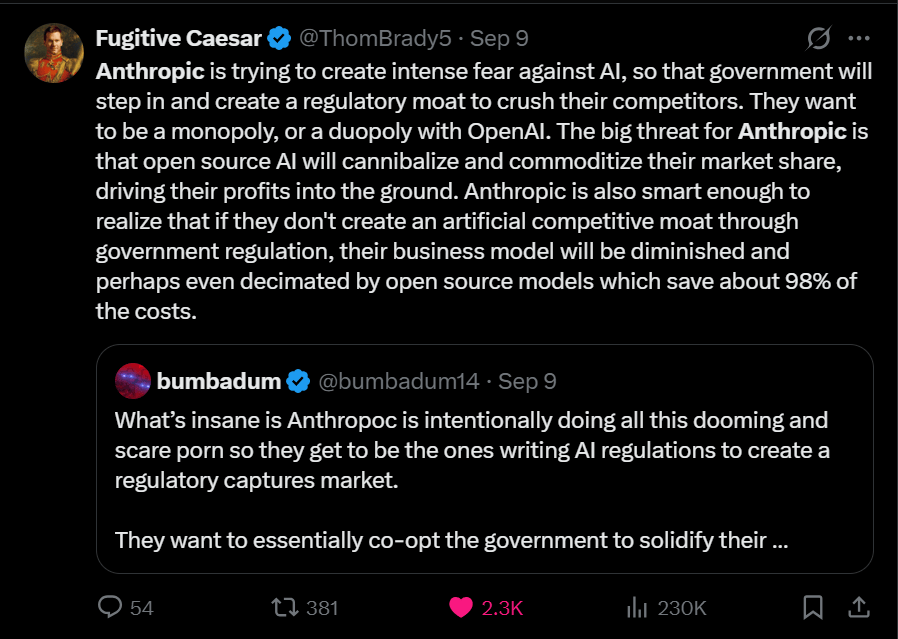
For this assignment, I decided to tackle a claim that has been making the rounds the last week or so and is something I find very interesting, I decided to find one tweet I feel represents one side of the discussion very well. The tweet, posted by a user named “Fugitive Caesar,” claims that the AI company Anthropic is deliberately manufacturing intense fear and “scare porn” about artificial intelligence. According to the post, Anthropic’s secret goal is to force the government to create a “regulatory moat” to crush open-source competitors, thereby securing a permanent monopoly or duopoly with OpenAI. The user argues that because open-source AI saves 98% on costs, Anthropic’s business model will be “decimated” unless they successfully co-opt the government.
This claim is highly worthy of evaluation. It touches on legitimate anxieties about Big Tech monopolies, but it is dripping with red flags. It relies on aggressive, conspiratorial language and makes sweeping assumptions about a company’s hidden motives. Because it is so polarizing, I decided to evaluate the claim using the SIFT method, a strategy used by professional fact checkers. Here is my step by step process
Step 1: S – Stop
When I first read the tweet, the heavy use of phrases like “crush their competitors,” “scare porn,” and “cannibalize” immediately stood out. This type of Emotional language is designed to trigger outrage before you have a chance to think critically. My first step was to stop and recognize that I was being manipulated into a strong emotional reaction, which meant I needed to pause before accepting the claim as truth or sharing it.
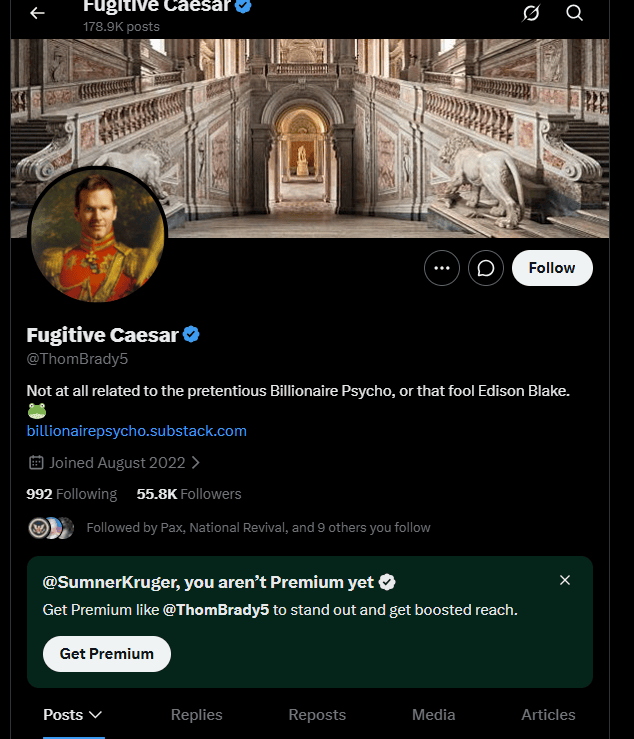
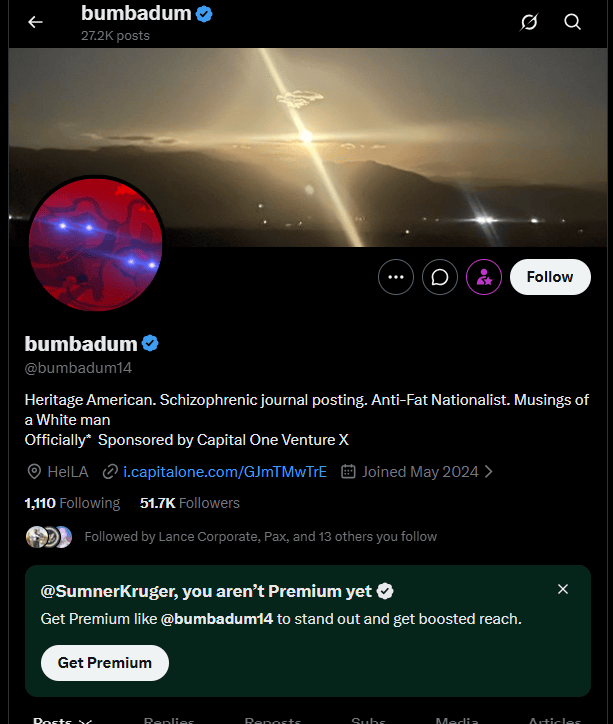
Step 2: I – Investigate the Source Instead of taking the post at face value, I evaluated who was making the claim. The author is a Twitter account named “Fugitive Caesar,” who is quote-tweeting another account named “bumbadum”. Neither of these accounts belong to established technology journalists, AI policy analysts, or verified researchers. They are simply pseudonymous social media commentators sharing their personal, unvetted opinions. Knowing this, I realized I had to verify their assertions elsewhere.
Step 3: F – Find Better Coverage
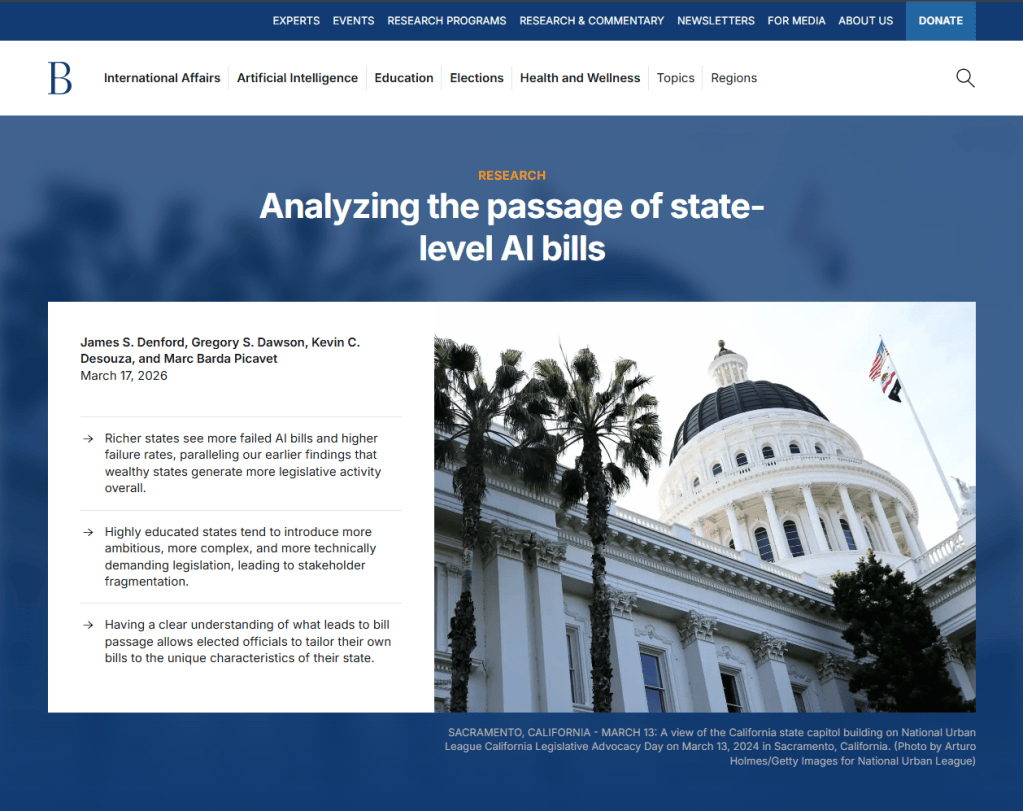
To get the real story, I used a technique called “lateral reading.” I opened a new browser tab and searched for professional coverage regarding “Anthropic open source AI regulation” and the recent California AI safety bill, SB 1047. I found detailed reporting from outlets like PCMag and the Brookings Institution. The reporting revealed a much more nuanced reality: while Anthropic did support the California safety bill, they actually lobbied against the most restrictive government overreaches. Anthropic’s CEO specifically requested amendments to eliminate a proposed government oversight agency (the Frontier Model Division) because it was too rigid and could hurt innovation.

Step 4: T – Trace Claims to the Original Context
Finally, I wanted to trace the claim about open source AI being banned back to the actual legislation. By looking up the text and analysis of California SB 1047, I found that the regulations were exclusively targeted at massive frontier models costing over $100 million to train. The bill did not outlaw everyday open-source development. While the AI open source community did have legitimate, well documented concerns about the bill’s liability requirements, the tweet’s assertion that Anthropic was trying to completely “decimate” the 98%-cheaper open-source market through a blanket government ban was a gross distortion of the actual policy.
Final Assessment
My final thought is that this tweet takes a genuine debate topic and totally distorts it using fear mongering and sensationalism. There is a kernel of truth to the underlying concept the author is trying to reference, and there is legitimate, ongoing debate that strict government regulations can inadvertently favor massive corporations that can afford expensive compliance teams, thereby squeezing out smaller startups and open source developers.
However, this specific tweet does a bad job at using facts to explain that dynamic. Instead of engaging with actual legislation or economic theory it relies on aggressive conspiratorial language. Furthermore, the idea of this conspiracy falls apart when you look at the wider industry. If strict government AI safeguards were simply a guaranteed “moat” that all wealthy tech monopolies secretly wanted, we would see unified support for it. Instead, companies that already possess massive sums of money such as Meta, Google, and Microsoft are not calling for these strict safeguards. In fact, they have actively opposed or raised serious concerns about these exact types of regulations in California. Meta, for instance, has heavily championed open-source AI and argued that strict liability regulations would actually harm open-source development, not protect it. Even OpenAI ended up opposing the bill.


Leave a Reply